
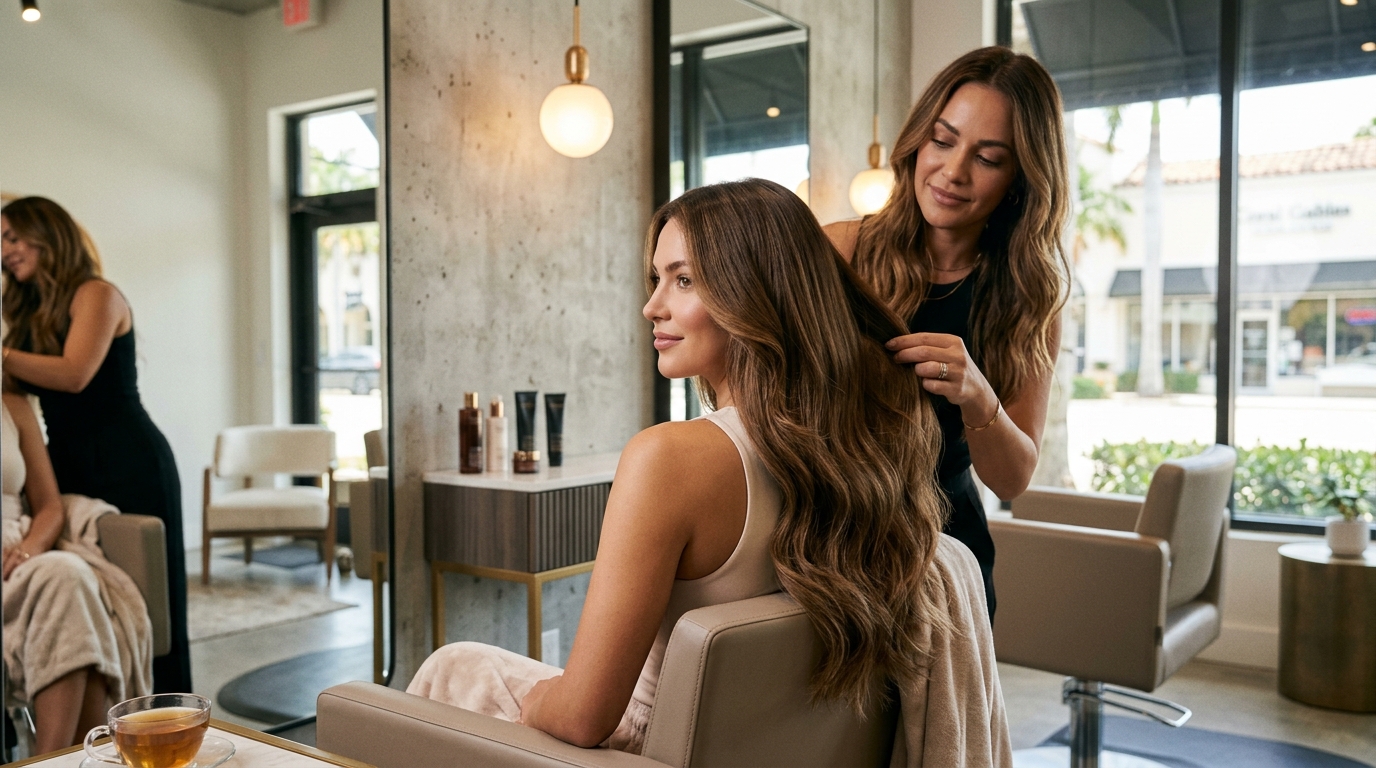
Choosing the right hair extension method is a critical decision that impacts both your aesthetic goals and the long-term health of your natural hair. In Miami’s humid climate, the stability and comfort of your extension application are paramount. Data from the American Academy of Dermatology indicates that improper extension application can lead to traction alopecia, a form of hair loss caused by constant pulling on the hair follicles. This statistic underscores the importance of selecting a method that balances volume with safety. At Avant-Garde Salon & Spa, we prioritize methods that enhance your look without compromising your hair’s integrity. (Contact Avant Garde Salon)
Understanding Tape-In Extension Mechanics
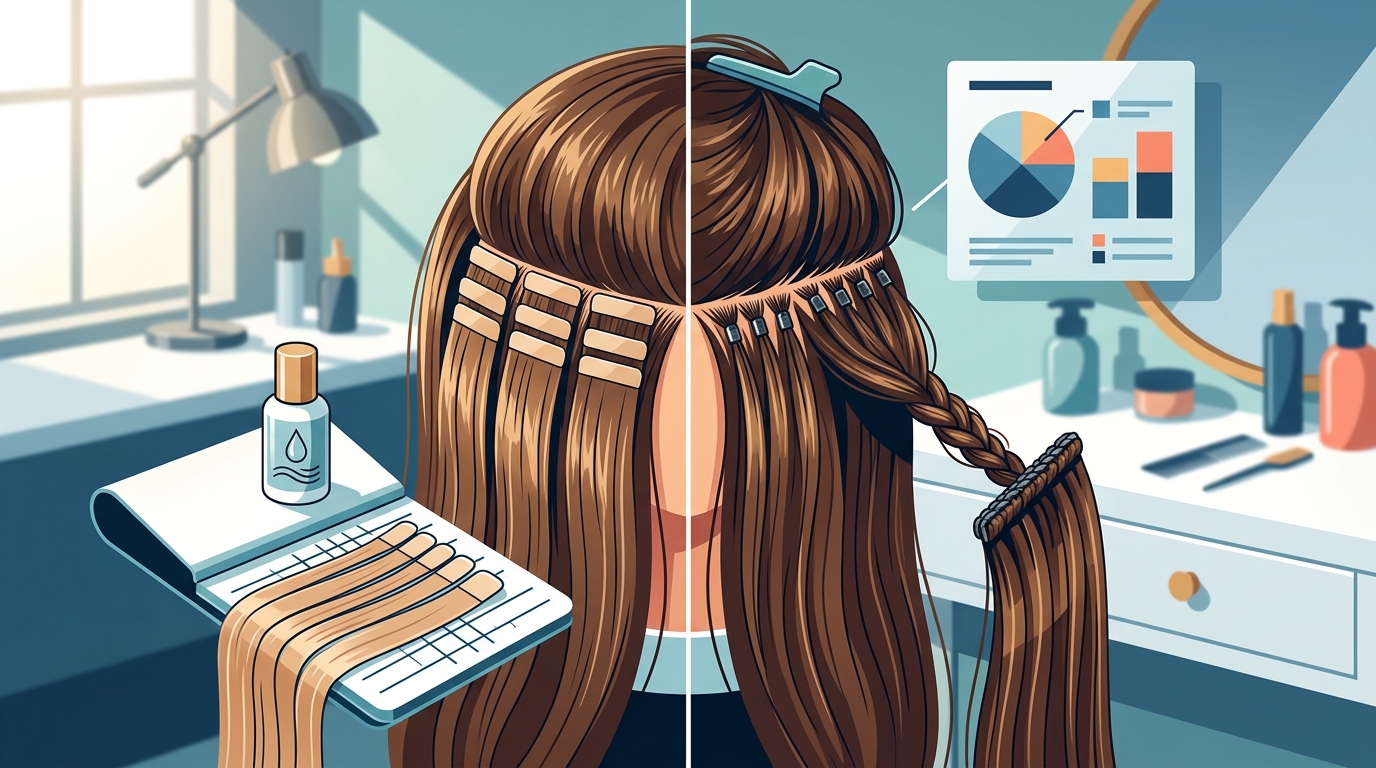
Tape-in extensions are widely regarded as one of the most versatile and natural-looking options available today. These extensions consist of thin wefts of human hair with a medical-grade adhesive strip on one side. The application process involves sandwiching a thin layer of your natural hair between two tape-in wefts. This method creates a flat, seamless bond that lies close to the scalp, making it virtually undetectable. (Body Waxing Services Avant)
The primary advantage of tape-ins is their lightweight nature. Unlike heavier methods, tape-ins place minimal stress on the hair follicle. This is particularly beneficial for clients in Miami, where humidity can weigh down hair and exacerbate tension. The adhesive used in high-quality tape-ins is designed to be strong enough to hold through daily activities but gentle enough to allow for easy removal and reapplication. This balance is crucial for maintaining hair health over time. (Face Beauty Services Facials)
At Avant-Garde Salon & Spa, we use premium tape-in extensions that are carefully selected for their texture and color match. Our stylists ensure that the placement is strategic, avoiding areas of high tension to prevent breakage. This approach aligns with industry standards for safe extension wear, as recommended by hair care professionals who emphasize the importance of proper placement and tension management. (Innovative Avant Garde Hair)
Tape-Ins vs. Sew-In Weaves
When comparing tape-in extensions to sew-in weaves, the differences in application and impact on natural hair are significant. Sew-in weaves involve braiding the natural hair into a cornrow pattern and then sewing the extension weft onto the braids. This method offers maximum security and is often preferred for those with very active lifestyles or those who engage in frequent swimming.
| Feature | Tape-In Extensions | Sew-In Weaves |
|---|---|---|
| Application Time | 45-60 minutes | 2-4 hours |
| Weight on Scalp | Lightweight | Heavy |
| Visibility | Undetectable | Visible at roots if not done well |
| Removal Process | Quick and gentle | Time-consuming |
| Hair Health Impact | Low risk if maintained | High risk of tension alopecia |
While sew-ins provide a secure hold, the braiding process can create significant tension on the scalp. Over time, this tension can lead to hair thinning and breakage, especially if the weave is kept in for too long. Tape-ins, on the other hand, distribute weight more evenly and do not require braiding, reducing the risk of traction damage. For clients seeking a balance between volume and hair health, tape-ins are often the superior choice.
Tape-Ins vs. Glue-In Extensions
Glue-in extensions, also known as fusion extensions, use a keratin-based adhesive to bond the extensions to the natural hair. This method has been popular for its longevity, but it comes with several drawbacks that make it less favorable than tape-ins in many cases.
The primary issue with glue-in extensions is the removal process. Removing the keratin bond requires heat and specialized solvents, which can be harsh on the natural hair. This process often leads to significant hair damage, including breakage and dryness. Additionally, the glue can melt in high temperatures, which is a concern for Miami’s warm climate. Tape-ins avoid these issues by using a removable adhesive that does not require heat for removal.
Furthermore, glue-in extensions can be difficult to maintain. The adhesive can degrade over time, leading to slippage or uneven wear. Tape-ins offer a more consistent hold and are easier to adjust during maintenance appointments. At Avant-Garde Salon & Spa, we recommend tape-ins for their ease of maintenance and lower risk of damage, ensuring that your hair remains healthy and vibrant.
Tape-Ins vs. Micro-Link Beads
Micro-link extensions, also known as micro-bead or micro-ring extensions, use small metal or silicone beads to clamp the extension weft to the natural hair. This method is popular for its non-adhesive approach, but it has its own set of challenges.
One of the main concerns with micro-links is the potential for slippage. If the beads are not tightened properly, the extensions can slide down the hair shaft, causing discomfort and uneven distribution of weight. Additionally, the metal or silicone beads can cause tangling and matting, especially for those with curly or textured hair. Tape-ins provide a smoother, more seamless look that is less prone to tangling.
Another consideration is the removal process. Micro-links require a specialized tool to open the beads, which can be time-consuming and potentially damaging if not done correctly. Tape-ins can be removed quickly and gently using a specialized solution, minimizing stress on the natural hair. For clients seeking a hassle-free experience, tape-ins are the more practical option.
Maintenance and Longevity
Maintenance is a crucial factor in choosing the right extension method. Tape-in extensions typically need to be moved up every 6-8 weeks as your natural hair grows. This process involves removing the old tapes, cleaning the hair, and applying new tapes closer to the scalp. Regular maintenance ensures that the extensions remain secure and that your natural hair stays healthy.
At Avant-Garde Salon & Spa, we offer comprehensive maintenance packages that include professional removal, cleaning, and reapplication. Our stylists are trained to handle tape-ins with precision, ensuring that your extensions look natural and feel comfortable. We also provide guidance on home care, including recommended products and techniques to extend the life of your extensions.
Proper home care is essential for maintaining the quality of your tape-ins. We recommend using sulfate-free shampoos and conditioners to prevent the adhesive from breaking down prematurely. Avoid applying conditioner directly to the tape tabs, as this can weaken the bond. Regular brushing with a loop brush can help prevent tangling and keep your extensions looking their best.
Key Takeaways
- Tape-in extensions offer a lightweight, undetectable, and versatile solution for adding volume and length.
- Compared to sew-in weaves, tape-ins place less tension on the scalp, reducing the risk of traction alopecia.
- Unlike glue-in extensions, tape-ins do not require heat for removal, minimizing the risk of heat damage.
- Tape-ins are less prone to tangling and slippage compared to micro-link bead extensions.
- Regular maintenance every 6-8 weeks is required to keep tape-ins secure and your natural hair healthy.
- Avant-Garde Salon & Spa provides expert application and maintenance services for tape-in extensions in Miami.
- Proper home care, including the use of sulfate-free products, extends the longevity of your extensions.
Frequently Asked Questions
How long do tape-in extensions last?
Tape-in extensions typically last between 6 to 8 weeks before needing to be moved up. With proper care, the extensions themselves can be reused multiple times.
Are tape-in extensions damaging to natural hair?
When applied and removed correctly by a professional, tape-in extensions are not damaging. They are designed to be lightweight and distribute weight evenly, reducing stress on the hair follicles.
Can I swim with tape-in extensions?
Yes, you can swim with tape-in extensions. However, it is important to rinse your hair with fresh water after swimming to remove chlorine or salt, which can weaken the adhesive.
How do I remove tape-in extensions at home?
It is not recommended to remove tape-in extensions at home. Professional removal using a specialized solution ensures that your natural hair remains intact and healthy.
What is the best shampoo for tape-in extensions?
A sulfate-free shampoo is best for tape-in extensions. Sulfates can break down the adhesive, causing the extensions to slip or fall out prematurely.
Can I color my tape-in extensions?
Yes, tape-in extensions can be colored, but it is best to have this done by a professional to ensure the color matches your natural hair and to avoid damaging the extensions.
How much do tape-in extensions cost in Miami?
The cost of tape-in extensions varies depending on the length, quality, and amount of hair needed. At Avant-Garde Salon & Spa, we offer competitive pricing and can provide a detailed quote during your consultation.
Book Your Consultation
Ready to transform your look with the perfect extension method? Visit Avant-Garde Salon & Spa in Coral Gables for a personalized consultation. Our expert stylists will assess your hair type and goals to recommend the best solution for you. Contact us today to schedule your appointment and discover the Avant-Garde difference.