
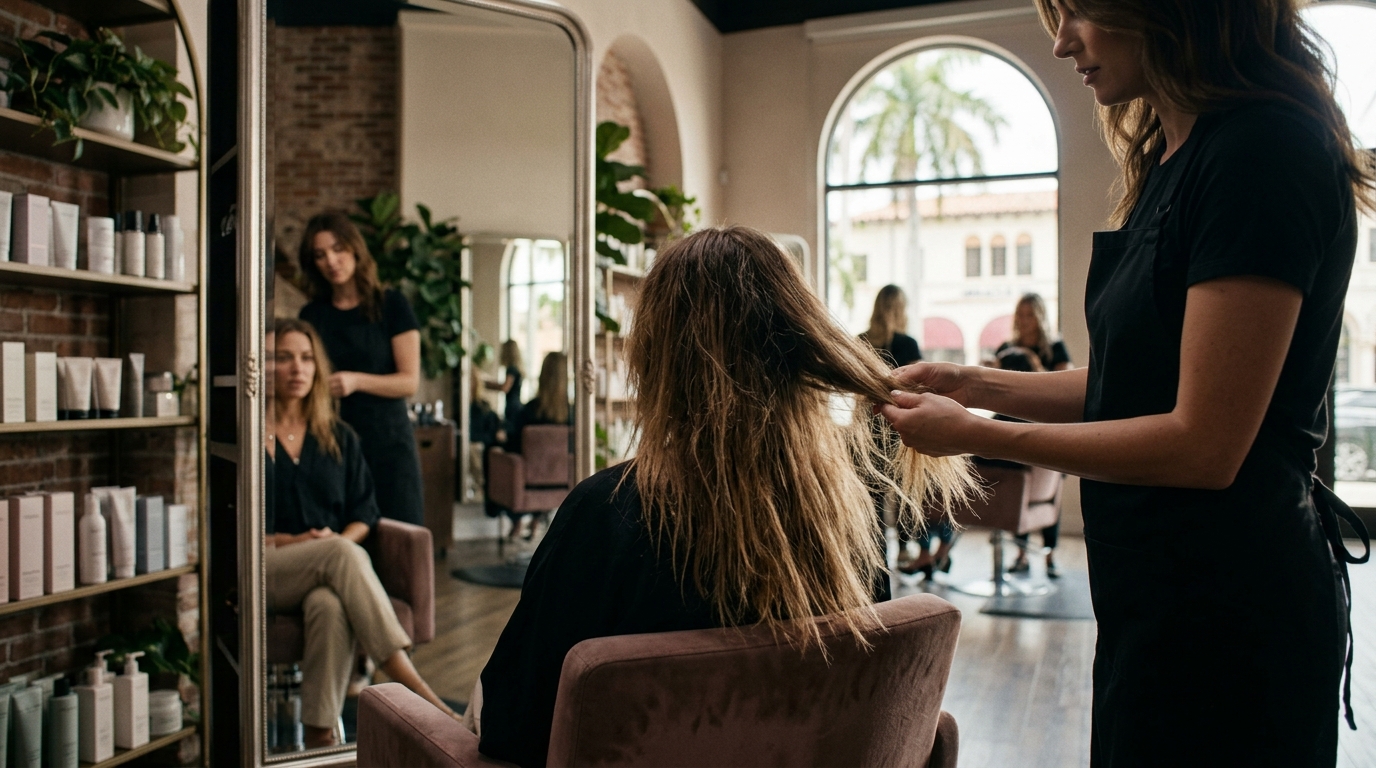
Research indicates that up to 90% of women and 40% of men experience some form of hair damage due to environmental stressors and styling habits. In the humid climate of Coral Gables, this figure often skews higher due to moisture-induced cuticle swelling and UV exposure. Many clients visit our salon with severe breakage that could have been prevented by adjusting their daily routine. Understanding the mechanics of hair health is the first step toward restoring your natural shine and strength.
The Wet Hair Trap
One of the most frequent errors we see in our Coral Gables salon is aggressive brushing of wet hair. Hair is at its most fragile state when saturated with water. The hydrogen bonds within the hair shaft are temporarily broken, making the strand elastic and prone to snapping under tension.
Why Wet Brushing Causes Breakage
When you use a fine-tooth comb on soaking wet hair, you are essentially pulling on a weakened rope. This leads to immediate mechanical damage. The cuticle layers lift and tear, resulting in split ends that travel up the shaft. This type of damage is irreversible without cutting the hair.
The Correct Approach
Always use a wide-tooth comb or a detangling brush designed for wet hair. Start at the ends and work your way up to the roots. This method minimizes tension and preserves the integrity of the hair shaft. At Avant-Garde Salon & Spa, we recommend applying a leave-in conditioner before detangling to provide slip and protection.
Heat Styling Missteps
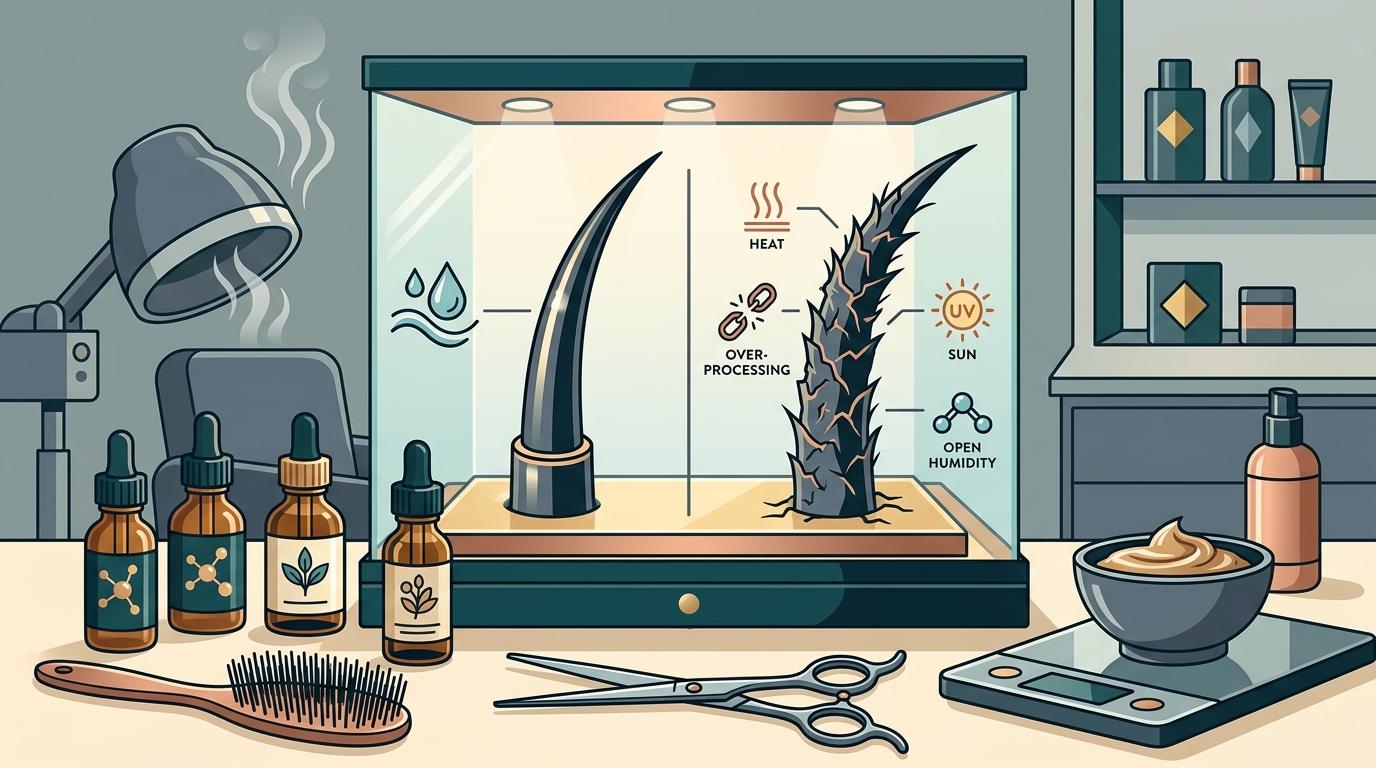
Heat styling is a double-edged sword. While it creates beautiful styles, improper use can lead to permanent structural damage. The keratin protein in your hair begins to denature at temperatures above 300 degrees Fahrenheit. This process alters the hair's ability to hold moisture and style.
Temperature Control Matters
Using flat irons or curling wands on high settings without a heat protectant is a recipe for disaster. The heat strips moisture from the cortex, leaving the hair dry, brittle, and dull. Fine hair requires lower temperatures, typically between 250 and 300 degrees. Thick or coarse hair may tolerate up to 380 degrees, but caution is still advised.
Protective Barriers
Always apply a thermal protection spray before using any hot tools. These products create a barrier that distributes heat evenly and reduces moisture loss. For those who style daily, consider incorporating a hair treatment into your weekly routine to repair existing damage.
Chemical Overlap and Timing
Coloring and perming are transformative services, but they come with a cost to hair health. A common mistake is overlapping chemical products onto previously treated hair. This causes "chemical burns" on the scalp and severe breakage along the mid-lengths and ends.
The Danger of Overlap
When you apply bleach or dye to new growth, the product must only touch the virgin hair at the roots. Applying it to already lightened or colored hair leads to over-processing. The hair becomes porous, gummy, and eventually snaps off. This is often referred to as "overlapping damage."
Professional Timing
Professional stylists are trained to monitor processing times and assess hair condition in real-time. We use bond-building technologies to mitigate damage during coloring services. If you are attempting at-home color, be extremely cautious about timing and product placement. For complex corrections, visit a color correction specialist to ensure safety.
Product Accumulation
Using too many styling products can lead to buildup that weighs hair down and clogs follicles. Silicones and polymers can coat the hair shaft, preventing moisture from penetrating. This creates a cycle where hair looks shiny initially but becomes dry and brittle over time.
Identifying Buildup
If your hair feels waxy, looks dull, or loses volume quickly after washing, you likely have product buildup. This layer blocks nutrients and moisture from reaching the hair cortex. It also makes hair more susceptible to environmental damage.
Clarifying Solutions
Incorporate a clarifying shampoo into your routine once every two weeks. This removes excess product, minerals, and pollutants. Follow up with a deep conditioning mask to restore hydration. Our facial and body treatments often complement hair care by promoting overall wellness and circulation.
The Role of Professional Care
While home care is essential, professional interventions are necessary for severe damage. Trichologists and master stylists can diagnose the root cause of hair issues, whether it is internal health factors or external styling errors.
Diagnostic Assessments
A professional assessment includes analyzing hair porosity, elasticity, and density. This data helps in creating a customized treatment plan. For example, high porosity hair requires protein treatments, while low porosity hair needs moisture-focused products.
Treatment Options
Services like keratin treatments, bond builders, and deep conditioning masks can restore hair health. These treatments are formulated to penetrate the hair shaft and repair internal structures. Regular trims also help remove split ends before they travel up the shaft.
Key Takeaways
- Avoid brushing wet hair aggressively to prevent mechanical breakage.
- Always use heat protectants and lower temperatures when styling.
- Never overlap chemical products onto previously treated hair.
- Use clarifying shampoos to remove product buildup regularly.
- Seek professional diagnosis for persistent hair issues.
- Incorporate bond-building treatments to strengthen hair structure.
- Maintain regular trims to prevent split end propagation.
Frequently Asked Questions
How often should I get a haircut to repair damaged hair?
Getting a trim every 6 to 8 weeks helps remove split ends and prevents them from traveling up the hair shaft. This maintains the health of the remaining hair.
Can damaged hair be fully restored?
While dead hair cannot be brought back to life, its appearance and feel can be significantly improved through treatments and proper care. Bond-building services can restore strength and elasticity.
What is the best heat protectant for damaged hair?
Look for heat protectants containing silicones or polymers that form a barrier. Ingredients like argan oil and keratin also provide nourishment while protecting against heat.
How do I know if my hair is over-processed?
Signs include excessive dryness, brittleness, loss of elasticity, and a gummy texture when wet. If your hair snaps easily, it is likely over-processed.
Is it safe to color hair if it is already damaged?
It depends on the level of damage. Minor damage can be treated with color, but severe damage requires restorative treatments first. A professional assessment is crucial.
What causes hair to become porous?
Chemical processing, heat styling, and environmental exposure can lift the cuticle, making hair porous. High porosity hair absorbs moisture quickly but loses it just as fast.
How can I prevent humidity from frizzing my hair?
Use anti-humidity serums and avoid heavy proteins that can attract moisture. Blow-drying hair straight can help seal the cuticle and reduce frizz.
Book Your Restoration
Ready to transform your hair health? Visit Avant-Garde Salon & Spa in Coral Gables for expert care and personalized treatments. Our team is dedicated to helping you achieve your best hair yet. Contact us today to schedule your appointment.