

For thinning hair, volume wefts are generally better than tape-in extensions because they distribute weight evenly and avoid the tension that can worsen traction alopecia. This guide explains how to choose the right method, what to ask your stylist, and how to maintain healthy results at Avant-Garde Salon & Spa.
How to Choose the Right Method
Assessing Hair Density
If your hair is fine or has significant gaps, wefts are safer. Tape-ins require a certain amount of natural hair to hold the bond. If the natural hair is too weak, the bond may slip or pull on the follicle. Wefts allow for a lighter application that supports the hair rather than weighing it down. For additional details, review the .
Scalp Sensitivity
Scalp sensitivity is a major factor. Tape-ins can cause irritation if the adhesive touches the scalp. Wefts sit further from the scalp, reducing the risk of contact dermatitis or folliculitis. If you have a sensitive scalp, prioritize methods that keep products away from the skin. For additional details, review the Customer Experience.
What to Ask Before Committing
Before booking, ask specific questions to ensure the stylist understands your hair condition. Do not just ask for "extensions." Ask about the method's impact on thinning hair. For additional details, review the Frequently Asked Questions.
Key Questions for Your Stylist
- "Do you have experience applying extensions to thinning or fine hair?"
- "Which method do you recommend for my specific density, and why?"
- "How will you protect my scalp during the application?"
- "What is the removal process, and how long does it take?"
A reputable stylist at Avant-Garde Salon & Spa will assess your hair integrity before recommending a service. They should be willing to explain the pros and cons of each method for your unique situation.
How to Verify Credentials
Extension application is a specialized skill. Not all stylists are trained in advanced techniques for thinning hair. Verify that your stylist has specific training in extension methods. Look for certifications from recognized extension brands or professional organizations.
Checking Experience
Ask for before-and-after photos of clients with similar hair types. A stylist who specializes in thinning hair will have a portfolio that demonstrates their ability to create volume without causing damage. You can review the team's expertise on the Avant-Garde Salon & Spa website.
How the Application Works
Understanding the process helps you set realistic expectations. Both methods require multiple hours in the chair. The process involves sectioning, preparation, application, and styling.
Tape-In Application
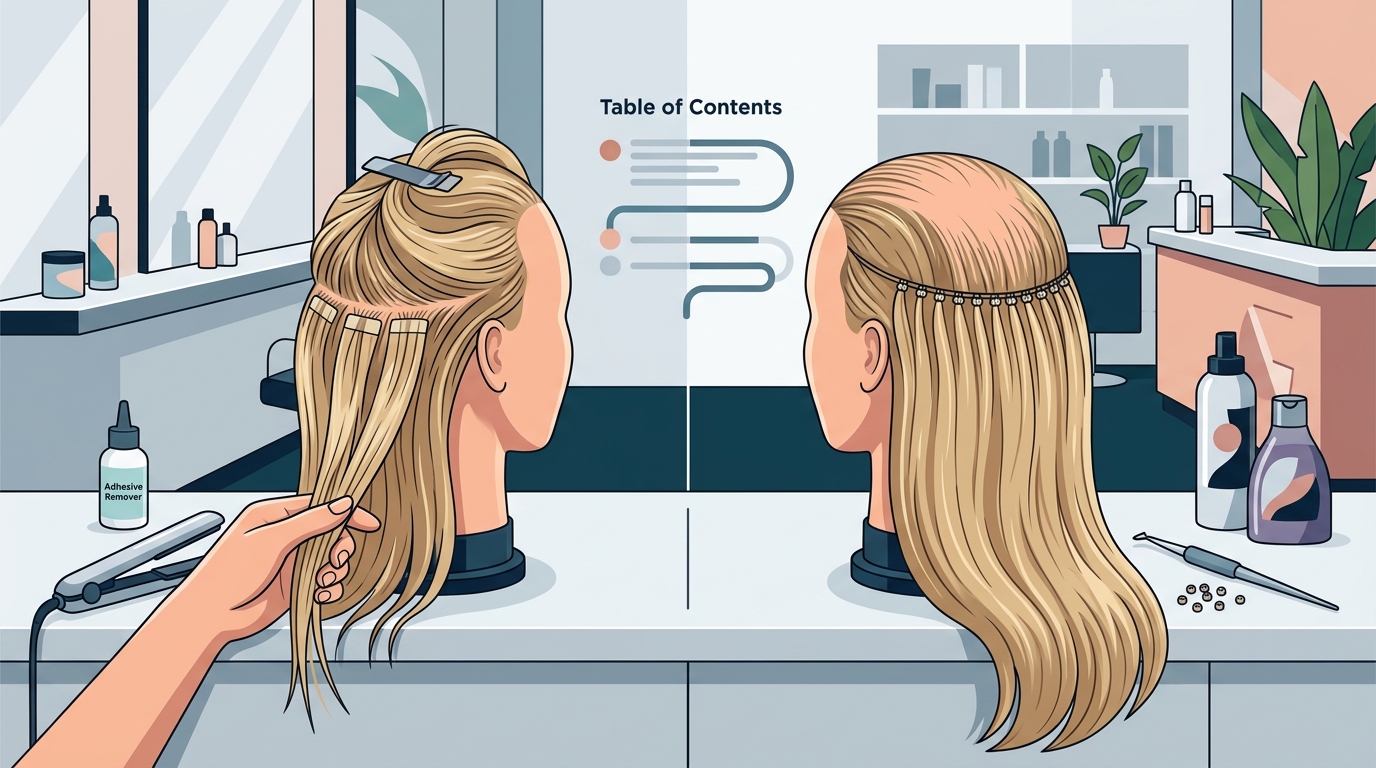
Tape-ins are applied by sandwiching a strip of extension hair between two sections of natural hair. The adhesive bonds the extension to the natural hair. This process is faster than sewing but requires precise placement to avoid visible tracks.
Volume Weft Application
Volume wefts are attached to a braided foundation. The stylist braids your natural hair and sews the wefts onto the braid. This method is more time-consuming but provides a more secure and comfortable fit for thinning hair.
What It Costs
Costs vary based on the length, thickness, and quality of the extensions. Tape-ins are often priced per pack, while wefts are priced by the head or by the number of wefts. Labor costs also differ, as wefts typically require more time to apply.
Factors Influencing Price
- Length of the extensions
- Quality of the hair (synthetic vs. human hair)
- Number of wefts or packs needed
- Stylist's experience level
For accurate pricing, consult the Avant-Garde Salon & Spa team during your consultation. They will provide a quote based on your specific needs.
Common Mistakes to Avoid
Many clients experience issues due to improper application or maintenance. Avoid these common mistakes to protect your hair health.
Applying to Damaged Hair
Never apply extensions to hair that is already broken or severely damaged. This can lead to further breakage. Ensure your hair is healthy before adding extensions.
Improper Maintenance
Using the wrong products can damage both your natural hair and the extensions. Avoid sulfates and heavy oils that can degrade the adhesive or tangle the wefts. Follow the specific care instructions provided by your stylist.
Versus Other Alternatives
Extensions are not the only option for adding volume. Consider other methods if extensions are not suitable for your hair.
| Method | Best For | Pros | Cons |
|---|---|---|---|
| Tape-In Extensions | Medium to thick hair | Fast application, seamless look | Can cause traction alopecia in thin hair |
| Volume Wefts | Thinning or fine hair | Even weight distribution, comfortable | Longer application time |
| Clip-Ins | Temporary volume | No commitment, easy to remove | Less secure, can slip |
| Wigs | Significant hair loss | Full coverage, no damage | Requires daily maintenance |
For Specific Thinning Situations
The best method depends on where your hair is thinning. Different patterns of thinning require different approaches.
Topical Thinning
If your hair is thinning at the crown, wefts are ideal. They can be placed strategically to add volume where needed without weighing down the rest of your hair.
Overall Fine Hair
If your hair is fine all over, consider a lighter application of wefts or clip-ins. Avoid heavy tape-ins that can pull on fine strands.
Rules and Consumer Protections
As a consumer, you have the right to a safe and professional service. Ensure that the salon follows hygiene standards and uses high-quality products. You should receive a clear explanation of the risks and benefits before the service begins.
Hygiene Standards
All tools and equipment should be sanitized between clients. Adhesives and products should be fresh and within their expiration dates. A reputable salon will prioritize your safety and comfort.
Local Specifics for Coral Gables
Living in Coral Gables, you have access to high-quality salons that understand the local climate. Humidity can affect how extensions behave. A local stylist will know how to style and maintain extensions in a humid environment.
Climate Considerations
Humidity can cause extensions to frizz or slip. Choose high-quality human hair extensions that are resistant to humidity. Your stylist at Avant-Garde Salon & Spa can recommend products that help manage humidity.
Timing Your Appointment
Timing is crucial for the success of your extensions. Schedule your appointment when you have time for the full process. Avoid scheduling extensions before a major event if you are unsure of the look.
Maintenance Schedule
Tape-ins need to be moved up every 6 to 8 weeks. Wefts need to be adjusted every 4 to 6 weeks. Plan your appointments accordingly to maintain the look and health of your hair.
Results Over Time
Extensions can provide immediate volume, but long-term results depend on proper care. With regular maintenance, you can enjoy healthy, voluminous hair for months. Neglecting maintenance can lead to tangling, matting, and damage.
Long-Term Hair Health
Regular check-ups with your stylist ensure that your natural hair remains healthy. They can monitor for any signs of damage or irritation and adjust the application as needed.
Key Takeaways
- Volume wefts are generally better for thinning hair than tape-ins.
- Wefts distribute weight evenly, reducing the risk of traction alopecia.
- Always consult with a specialist who has experience with thinning hair.
- Verify your stylist's credentials and ask for a portfolio.
- Costs vary based on length, quality, and labor.
- Avoid applying extensions to damaged hair.
- Follow proper maintenance routines to protect your hair.
- Schedule regular maintenance appointments to maintain results.
Frequently Asked Questions
Are tape-in extensions safe for thinning hair?
Tape-in extensions can be safe if applied correctly, but they may not be the best choice for significantly thinning hair. The concentrated weight can cause traction alopecia. Volume wefts are often a safer alternative for thinning hair.
How long do volume wefts last?
Volume wefts typically last 4 to 6 weeks before needing adjustment. With proper care, they can be worn for several months.
Can I swim with extensions?
Yes, you can swim with extensions, but you should wet your hair before swimming to prevent chlorine or saltwater from absorbing into the extensions. Rinse your hair thoroughly after swimming.
Do extensions damage natural hair?
Extensions can damage natural hair if applied or removed incorrectly. Proper application and maintenance are key to preventing damage. Always use a professional stylist.
How much do extensions cost?
Costs vary widely based on the type, length, and quality of the extensions. For an accurate quote, consult with a professional stylist.
Can I color my extensions?
Yes, you can color human hair extensions, but it is best to have them colored by a professional. Synthetic extensions cannot be colored.
How do I sleep with extensions?
It is recommended to braid your hair or tie it in a loose ponytail before sleeping. Use a silk or satin pillowcase to reduce friction and tangling.
What is the difference between tape-ins and wefts?
Tape-ins are pre-bonded strips of hair, while wefts are sewn or clipped into braided foundations. Wefts are generally better for thinning hair due to even weight distribution.