
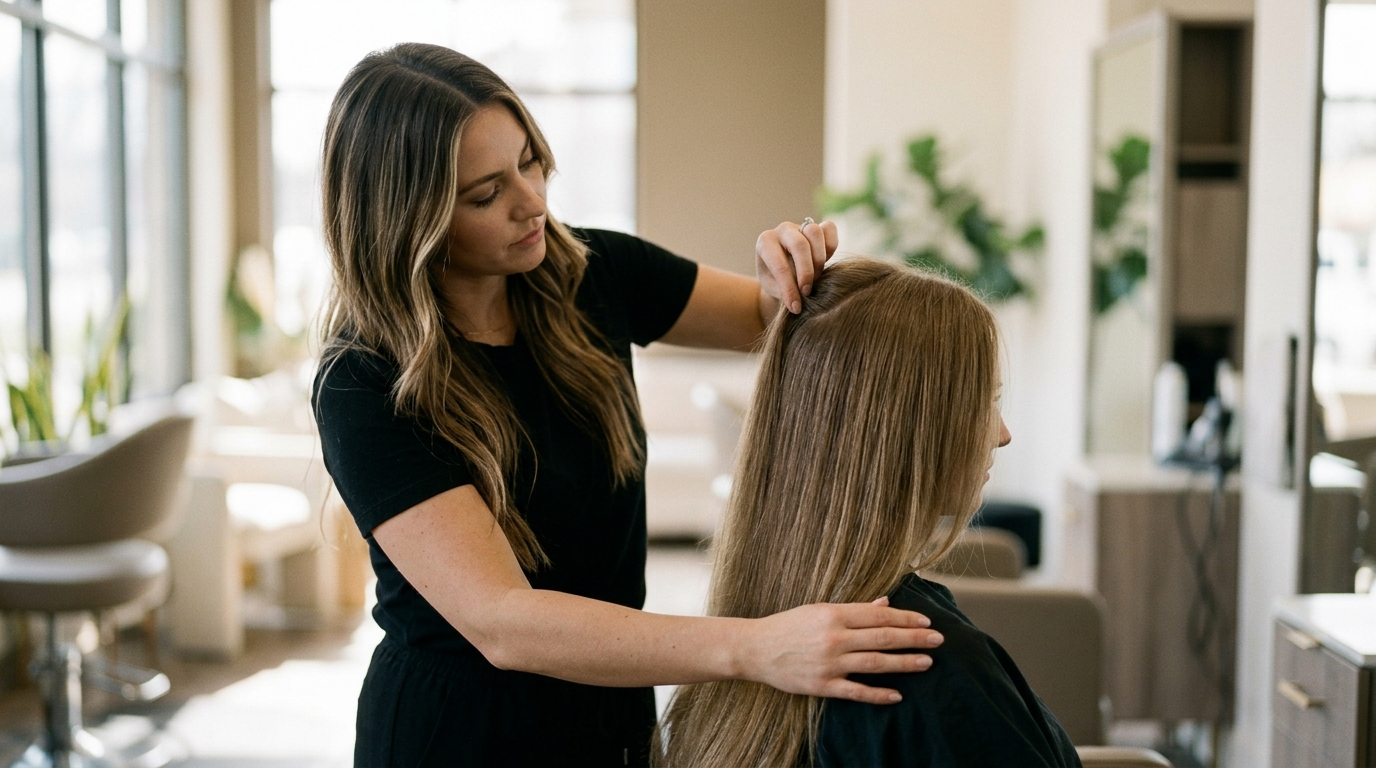
Tape-in extensions work for thin hair by using small, flat adhesive tabs to bond wefts of hair to your natural strands. This method adds instant volume and length without the heavy weight of traditional clip-ins. At Avant-Garde Salon & Spa, stylists carefully assess your hair density to ensure the application is safe and effective for your specific hair type.
The Mechanics of Tape-In Application
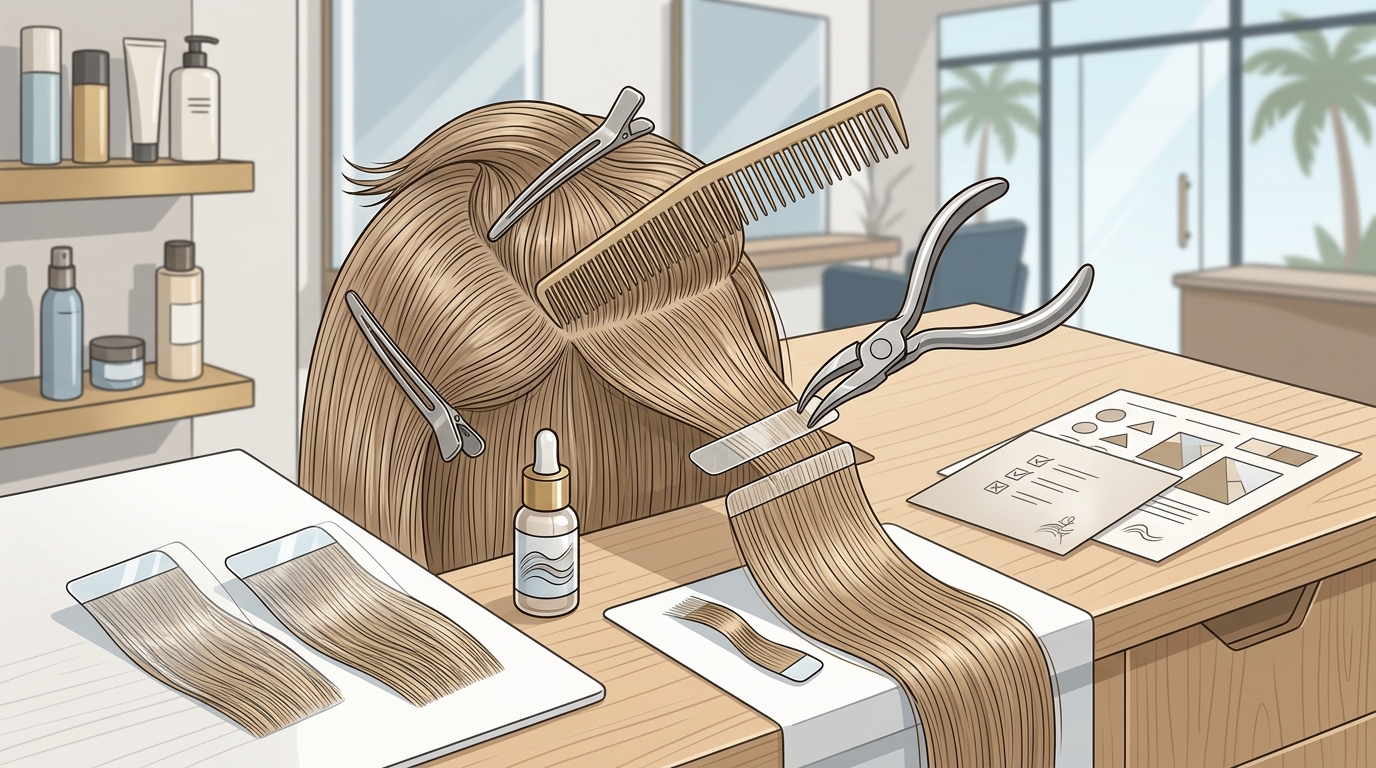
Tape-in extensions are a type of semi-permanent hair extension that uses a medical-grade adhesive to attach to your natural hair. The process involves sandwiching a small section of your natural hair between two pre-taped wefts. This creates a secure bond that holds the extension in place while allowing for natural movement. The flat profile of the tape ensures that the extensions lie flush against your head, making them virtually undetectable.
For individuals with thin hair, the key to success is the placement strategy. Stylists must avoid placing the tapes too close to the scalp, which can cause tension and potential breakage. Instead, they are placed slightly away from the root to distribute weight evenly. This technique ensures that the extensions provide volume without putting excessive stress on fragile hair follicles.
Benefits for Fine and Thinning Hair
One of the primary benefits of tape-in extensions is their ability to add volume without adding significant weight. Unlike bulky clip-in extensions, tape-ins are lightweight and distribute the load across a larger surface area. This makes them an ideal choice for those with fine or thinning hair who want to enhance their look without risking damage. The seamless integration allows for a natural appearance that grows out with your hair.
Additionally, tape-in extensions can be styled just like your natural hair. You can wash, blow-dry, and heat style them with proper care. This versatility is crucial for maintaining a consistent look throughout the day. At Avant-Garde Salon & Spa, we emphasize that the right product selection is vital for thin hair to prevent tangling and matting.
Maintenance and Care Routine
Proper maintenance is essential to extend the life of your tape-in extensions and protect your natural hair. You should use sulfate-free shampoos and conditioners to keep the adhesive intact. Avoid applying conditioner directly to the tape tabs, as this can weaken the bond. Instead, focus on the mid-lengths and ends of your hair. Regular brushing with a loop brush helps prevent tangles and keeps the extensions smooth.
When sleeping with tape-in extensions, it is recommended to braid your hair or tie it in a loose ponytail. This prevents friction and tangling while you sleep. You should also avoid using oil-based products near the roots, as oils can dissolve the adhesive. Following these care guidelines ensures that your extensions remain secure and your natural hair stays healthy.
Safe Removal and Reapplication
Tape-in extensions are not permanent and typically last between six to eight weeks. After this period, the natural hair growth causes the tapes to move away from the scalp. At this point, the extensions must be professionally removed and reapplied. The removal process involves using a specialized adhesive remover to dissolve the tape without damaging your natural hair. This is a critical step that should only be performed by a trained professional.
Attempting to remove tape-in extensions at home can lead to hair breakage and scalp irritation. It is important to schedule regular maintenance appointments to keep your extensions in optimal condition. At Avant-Garde Salon & Spa, our stylists provide detailed aftercare instructions to help you maintain your extensions between visits. This ensures a seamless transition during the reapplication process.
Considerations for Hair Health
While tape-in extensions are generally safe, they are not suitable for everyone. If you have extremely fragile or chemically treated hair, a consultation is necessary to determine if tape-ins are the right choice. Your stylist will assess the strength of your hair and recommend the best approach. In some cases, alternative methods may be suggested to ensure the health of your natural hair is prioritized.
It is also important to consider the cost and time commitment involved with tape-in extensions. They require regular maintenance and professional application, which can be a significant investment. However, for many clients, the confidence boost and aesthetic improvement make it worthwhile. Understanding these factors helps you make an informed decision about whether tape-ins are the right solution for your hair goals.
Key Takeaways
- Tape-in extensions use a flat adhesive to bond wefts to natural hair, providing lightweight volume.
- Placement slightly away from the scalp is crucial for protecting thin hair from tension.
- Sulfate-free products and proper brushing are essential for maintaining the adhesive bond.
- Extensions typically last six to eight weeks before requiring professional reapplication.
- Safe removal requires specialized products and professional expertise to prevent damage.
- A consultation with a stylist is necessary to assess hair health and suitability for tape-ins.
Frequently Asked Questions
Can tape-in extensions damage thin hair?
When applied and removed correctly by a professional, tape-in extensions should not damage thin hair. Improper placement or DIY removal can cause breakage, so professional service is recommended.
How long do tape-in extensions last?
Tape-in extensions typically last between six and eight weeks. After this period, natural hair growth moves the tapes away from the scalp, requiring reapplication.
Can I wash my hair with tape-in extensions?
Yes, you can wash your hair, but you should use sulfate-free products and avoid applying conditioner directly to the tape tabs to maintain the adhesive bond.
Are tape-ins suitable for very fine hair?
Tape-ins can be suitable for fine hair if placed correctly. A professional consultation is needed to ensure the weight is distributed safely without stressing the follicles.
How do I sleep with tape-in extensions?
It is best to braid your hair or tie it in a loose ponytail before sleeping to prevent tangling and friction against the pillow.
Conclusion
Tape-in extensions offer a transformative solution for those with thin hair, providing volume and length with minimal weight. By understanding the mechanics, care requirements, and maintenance schedule, you can enjoy the benefits of extensions while keeping your natural hair healthy. For personalized advice and professional application, visit Avant-Garde Salon & Spa to schedule a consultation with our expert stylists.